The Valley Isle’s Ag Land Market at a Glance
Maui is Hawaii’s second-most populous island and, by most measures, the most sought-after for agricultural land. Supply is tight — Maui County restricts subdivision of ag land more aggressively than Hawaii County, so when quality parcels come on the market they tend to move quickly. Demand is driven by a combination of Upcountry’s legendary climate, the island’s strong farm-to-table economy, and buyers priced out of Kauai and Oahu who still want a refined Hawaiian lifestyle.
Most of Maui’s agricultural inventory falls into three distinct regions: Upcountry (the cool slopes of Haleakala), the North Shore rainforest belt (Haiku, Huelo, and toward Hana), and West Maui’s smaller ag pockets. Each has its own climate, its own crops, and its own pricing dynamic.
Maui’s Agricultural Regions
Upcountry: Kula, Ulupalakua, Keokea, Makawao
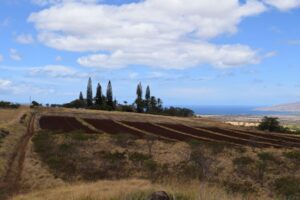
Upcountry Maui, on the western slopes of Haleakala between roughly 1,500 and 4,000 feet of elevation, is the most coveted farming region in the state. The climate is temperate year-round — 60s and 70s during the day, 50s at night — and the volcanic soil is extraordinary. This is where Maui’s famous sweet onions, protea, lavender, wine grapes (at Ulupalakua Ranch), strawberries, and cool-climate vegetables grow. Buyers who want a “farmhouse in paradise” lifestyle almost always end up looking Upcountry first. Expect $200,000 to $600,000+ per acre for smaller parcels in the sweet spot of the Kula belt; larger tracts further out in Keokea and Ulupalakua can be found at lower per-acre prices.
Haiku and the North Shore
Drop down from Upcountry toward the ocean on the windward (north) side of Haleakala and you’re in Haiku country — rainforest-adjacent, lush, and deeply fertile. This is where Maui grows its tropical fruit (mango, lilikoi, avocado, rambutan), tropical flowers, and specialty coffee. Rainfall averages 60–100 inches per year in most of Haiku, enough that county water or a private catchment/well combination can support full agricultural operations. Haiku parcels trade at $150,000 to $500,000 per acre depending on road access, view, and whether structures are already in place.
Hana and the East Side
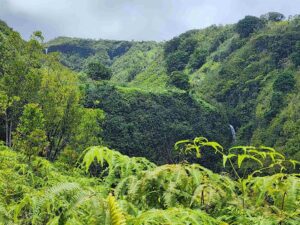
Past Haiku, as the road narrows and the waterfalls multiply, you enter the Hana coast — Maui’s most remote and least-developed region. Ag land out here is cheaper per acre than anywhere else on Maui, but the trade-offs are real: limited infrastructure, long drives to services, frequent road closures in heavy rain, and a very different pace of life. For the right buyer, Hana offers what no other part of Maui can — genuine remoteness, enormous rainfall, and land prices closer to the Big Island than the rest of Maui. Expect $30,000 to $150,000 per acre for ag parcels in the Hana district.
West Maui
West Maui’s ag inventory is small and scattered — Kaanapali, Launiupoko, and the slopes above Lahaina all have some agricultural-zoned parcels, but they’re rare and often come at resort-market prices. If West Maui ag land is on your list, be prepared to move fast when a listing appears and to pay premium prices. Expect $300,000 to $800,000+ per acre for smaller parcels.
Central Maui and the Isthmus
The flat central isthmus between the two volcanoes was historically sugar country and, more recently, pineapple and diversified agriculture. It’s where Maui’s industrial-scale farming happens — but individual smaller parcels are limited, and much of the land is held by large operators. Occasional 20–100 acre tracts do come on the market.
Maui County Zoning: Stricter Than the Big Island
Maui County takes a stricter view of “agricultural use” than Hawaii County. To build a farm dwelling on ag-zoned land in Maui County you typically need to demonstrate genuine agricultural activity — not just a lawn and some fruit trees. This matters enormously for buyers: a 5-acre Upcountry parcel that looks idyllic may have development restrictions that limit what you can actually build without filing a formal agricultural plan with the county. Always pull the TMK, confirm the zoning designation (Agricultural, Rural, or Interim), and understand the farm dwelling rules before you offer. Our county zoning guide covers the specifics.
Water on Maui: County, Wells, and East Maui Irrigation
Most Upcountry Maui parcels are on county water, but the Upcountry system has historical supply issues and new water meters can be hard to obtain in some areas — the Upcountry meter waitlist is a real thing to ask about before closing. Haiku and the North Shore mix county water with private wells and catchment. Hana is almost entirely catchment and private sources. A property without an existing water meter on county water can cost an extra $15,000 to $40,000 and wait months or years to get one installed, depending on the district.
What Maui Ag Land Actually Costs
Rough ranges for 5+ acre ag parcels on Maui in mid-2026:
- Kula / core Upcountry: $200,000–$600,000+ per acre
- Keokea / Ulupalakua (larger tracts): $80,000–$300,000 per acre
- Haiku: $150,000–$500,000 per acre
- Huelo / Upper Haiku: $80,000–$250,000 per acre
- Hana district: $30,000–$150,000 per acre
- West Maui ag pockets: $300,000–$800,000+ per acre
Maui’s market is always tight, so these ranges can shift quickly with limited inventory. Scroll up to see our current active listings with real asking prices.